Paige Massey
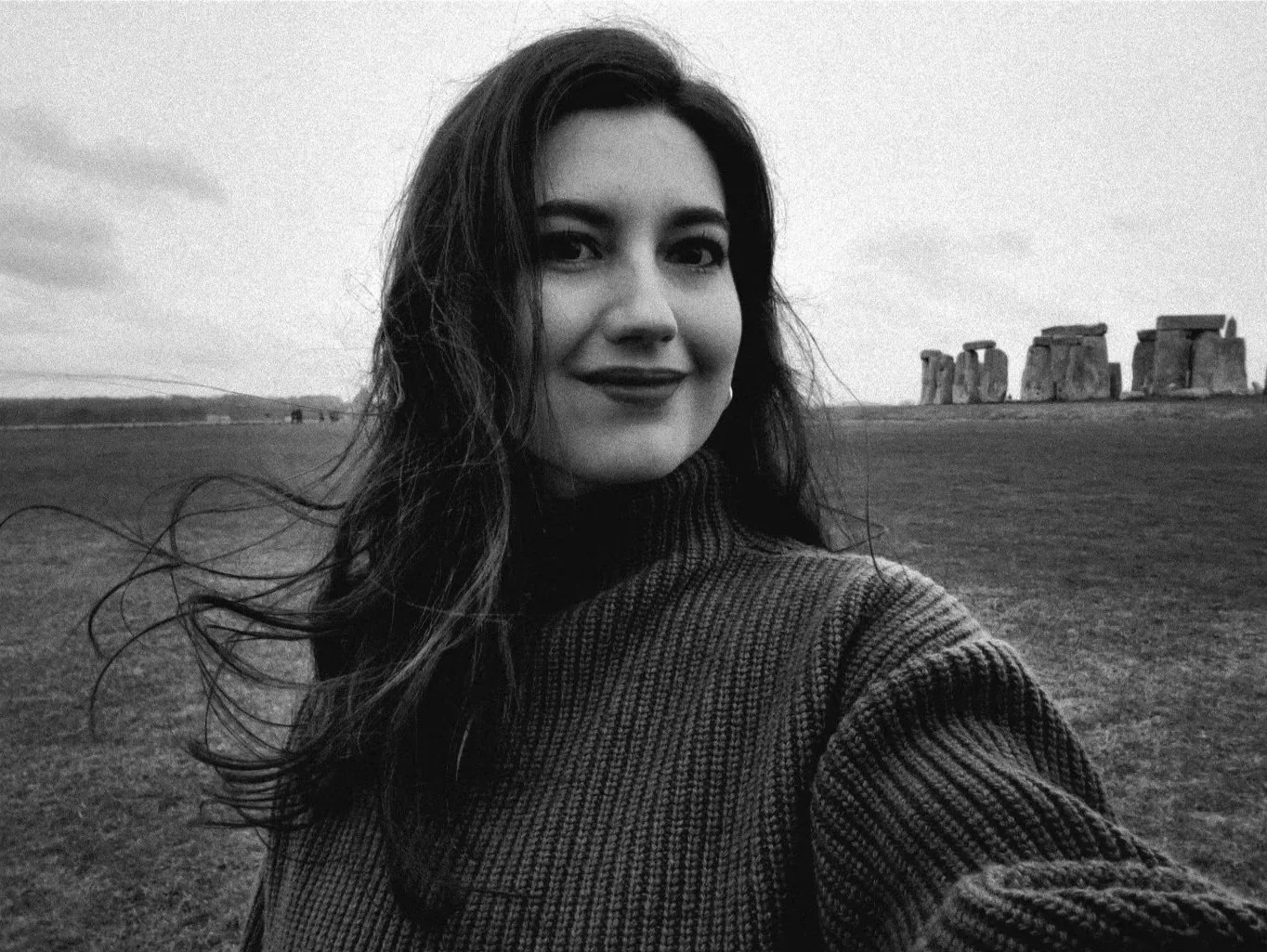
I have a B.A. in Philosophy from Pepperdine University where I was a ‘Great Books’ student and I am currently a Ph.D. student at CU Boulder where I am advised by Professor Matthias Steup. I live between London, England and Boulder, Colorado. I’m originally from Northern California (going back 8,000 years).
My research specialization is epistemology, the field of philosophy that examines the nature, sources, and limitations of knowledge. My dissertation will address several topics within the ethics of belief, including questions relating to permissivism, peer disagreement, and statistical evidence.
I have a robust background in humanitarian and volunteer work, particularly in the areas of refugee resettlement and domestic homelessness. I started out in economics and switched to philosophy after encountering Amartya Sen’s ‘capabilities approach’ to welfare economics.
like a shipwreck we die going into ourselves
·
as though we were drowning inside our hearts
·
as though we lived falling out of the skin into the soul
·
like a shipwreck we die going into ourselves · as though we were drowning inside our hearts · as though we lived falling out of the skin into the soul ·
-

Research
My research specialization is epistemology, the field of philosophy that examines the nature, sources, and limitations of knowledge. My dissertation will be a selection of articles on topics within the ethics of belief, a subfield of epistemology concerned with rational and ethical norms that govern how we should form beliefs. I am interested in both ‘traditional’ and ‘social’ epistemology, as well as their applications to philosophy of science, philosophy of law, bioethics, and governance of emerging technologies. For example, to what extent should we proportion our beliefs to available evidence? If two scientific theories are both compatible with a given body of evidence, can we pick between theories arbitrarily? Is statistical evidence deficient compared to other types of evidence? Under what circumstances is it acceptable for a layperson to go against expert opinion?
I have additional research interests in ethics, particularly effective altruism, that stem from my nonprofit work. I’ve twice been a guest at the Global Priorities Institute (now defunct) at Oxford and I’ve volunteered as a Giving Games organizer—a project of Giving What We Can and Peter Singer’s The Life You Can Save—to teach people about charitable giving and what makes one cause more impactful than another, raising money for the world’s most effective charities.
-

Teaching
My areas of competence include epistemology, symbolic logic, ethics, philosophy of science, philosophy of religion, Ancient philosophy, technology ethics, and social problems.
I regularly serve as a teaching assistant and have approximately 75 undergraduate students each semester. I am responsible for grading, designing assignments and assessments, lecturing and discussion groups, and office hours.
Courses I’ve taught include:
Global Issues and International Affairs
Social Problems
Intro to Philosophy
Symbolic Logic x2
Knowledge, Reality, and Value x2
Critical Thinking
Philosophy of Science
Technology EthicsI’ve also been a guest lecturer at UNC Chapel Hill covering a segment on capital punishment, and I regularly participate in pedagogy workshops through the Center for Teaching and Learning.
-

Service
For several years I have also led my department’s chapter of Minorities and Philosophy, an organization that removes barriers to philosophy for students from underrepresented or marginalized backgrounds. My annual mentorship program matches 20-35 undergraduates to faculty and graduate mentors, and my latest graduate school application workshop had 100 registrants from around the world. For these and other efforts, I won the President’s Diversity, Equity, and Inclusion Award as the sole student awardee across CU Boulder, CU Denver, Anschutz Medical School, and CU Colorado Springs.
Outside of philosophy, I’ve also worked as a Youth Support Specialist at a residential program from homeless Colorado teens experiencing mental health issues and drug abuse, I completed a year of full-time volunteer work at a refugee resettlement field office, volunteered five years teaching English to Syrian refugees, served on Vermont State’s list of disaster responders (mobilizing a temporary homeless shelter during deadly weather), participated in environmental restoration field work, served on the California State Commission for Juvenile Justice and Delinquency Prevention, and more.
-

Background
I am from a small town in rural Northern California (population 1,000) where I was raised by my late grandmother. I am Native American and grew up attending indigenous summer camps based around traditional ecological knowledge, such as forest stewardship (the U.S. Forest Service now adopts some indigenous forestry practices such as controlled burns and selective harvesting). I am the first in my family to attend university. I enjoy tennis, detective shows, literature, and cooking. My favorite book is The Brothers Karamazov, my favorite director is either Krzysztof Kieślowski or Hirokazu Koreeda, my favorite Kdramas are Our Blues and Revenant, my favorite food is sourdough toast, and my favorite place is Paris. My heroes are Raphael Lemkin, Paul Farmer, and my late middle school math and science teacher, Mrs. M. I started college as an economics major with math and nonprofit minors, but I switched to philosophy after being inspired by Amartya Sen’s welfare economics. I wanted to double major in film studies, but my scholarship wouldn’t allow it. In addition to philosophy and literature, I regularly read nonfiction in international development. I see epistemology and ethics as deeply intertwined and I want to be a professor to make both theoretical and practical progress on the topics of interest to me.